
›› The Times Magazine The Vultures 100 Best Albums Of All Time - 1993
›› The Times - Best Album Of The Decade 2000 - 2009
The Times Best Albums Of The Year
›› 2000 | 2009
Thanks to John Manning for supplying this list & accompanying article.
The Times - Nov - Dec 1993 - The Vultures 100 Best Albums of all Time
"What makes a classic album? Over the four weeks leading up to Christmas, the Vulture - together with a panel - will attempt a definitive answer by compiling a countdown of the 100 best albums produced in the last 30 years.
It started in the think-tank at Vulture HQ. As Born to Run came on the jukebox, someone blurted into his pint: "This is the best record ever made!" "But it wasn't from his best album," snapped a colleague from the depths of his anorak. And off he went. Is Sergeant Pepper better than the White Album? Did the Stones ever make a classic album? All the fundamental questions of 20th-century life were posed, debated and forgotten. But in the morning that wise old bird the Vulture announced his plan to list the Top 100 classic albums of all time. And he would need some help.
First, we had to define what constitutes a classic. These records had to have substance and longevity. At worst they had to be albums which made a memorable remark in the running conversation that is popular music. At best they would be records which changed musical history.
The hallmark of a classic album is that it is more than the sum of its parts. Unlike the humble old LP, which was either a collection of songs previously released as singles or a movie soundtrack, the album was a coherent whole. The Beatles started it in the Sixties by studiously avoiding putting their hits on their albums. To emphasise that their work should be consumed in 40-minute chunks, Sergeant Pepper was released without any track spacing. The album had become an art form transcending the mere song.
Next we needed to define our musical parameters. The familiar categories can be misleading. To an American, "rock 'n' roll" means virtually anything with a guitar recorded since 1955. In the UK it applies to a specific period before the Beatles. The word "rock" was used in the Seventies to mean grown-up, serious popular music. Now it implies tattooed men with perms and spandex trousers making a horrible din. "Pop" goes in and out of fashion, but usually applies to something faddish and short-lived.
Perhaps the word "album" itself would be enough, suggesting as it does a way of making as well as marketing music. True, other styles and genres are available for consumption on vinyl or compact disc, but their method of delivery does not define their form. No one wrote a symphony to fit on one side of a 12in record. Jazz at its best is created on stage, not in a studio. Some of the music the Vulture would chose would never be played live.
To make the list more readable there were some rules. No artist or band would be allowed more than two entries in the Top 100. This would prevent The Beatles, Bob Dylan and a few others dominating the list, although watch out for Neil Young, Paul Simon and Eric Clapton.
To introduce an element of impartiality, the Vulture enlisted a panel of "experts". From journalism came David Sinclair, rock critic of The Times, and Simon Frith, now chairman of the Mercury Music awards. From broadcasting we recruited Annie Nightingale and Mark Radcliffe (BBC Radio 1FM), Richard Skinner (Virgin 1215) and Tracey MacLeod (BBC2s Late Show). And from the other side of the microphone came three radio station heads of music - Richard Park (Capital Radio), Mark Storey (Piccadilly Radio) and Jon Myer (GLR) - and Sammy Jacob of XFM, which is bidding for a licence to broadcast indie music in London. Each week, one member will pick out their favourite from that week's compilation.
Each panellist was sent a list of 200 albums, prepared by me, representing a range of music from ABC to ZZ Top. They were asked to award each album a mark between 0 and 10 and then add up to 20 of their own suggestions, to which they would award the maximum 10 points. I adjudicated over disputes and tried hard to fiddle the result, so the lack of Lyle Lovett and Frank Zappa is a measure of my own failure.
So what have we ended up with? Like most chart run-downs, you will be kept waiting for the number one because we will be printing the Top 100 in four consecutive instalments leading up to Christmas. But I can reveal the headlines.
Incredibly, (thankfully - JW) there is no Dire Straits (Brothers in Arms was no 102), no Simply Red, and no Phil Collins or Genesis. Bruce Springsteen, The Who and Michael Jackson have only achieved one entry each. On the plus side there are inclusions for two Sixties soul legends, a cult English folk-rock band and an almost forgotten deceased singer-songwriter. Several of the albums were never hits, but have achieved legendary status. No fewer than seven of the Top 50 are less than 20 years old. Who says music is flash in the pan"
The List!
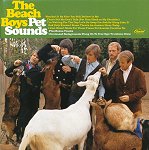
1- The Beach Boys - Pet Sounds - 1966
2 - The Beatles - Sergeant Pepper's Lonely Hearts Club Band - 1967
3 - Van Morrison - Astral Weeks - 1968
4 - Lou Reed - Transformer - 1973
5 - Bob Dylan - Highway 61 Revisited - 1965
6 - The Jimi Hendrix Experience - Are You Experienced - 1967
7 - The Beatles - Revolver - 1966
8 - Neil Young - After The Goldrush - 1970
9 - (Bob Marley And) The Wailers - Catch A Fire - 1973
10 - Otis Redding - Otis Blue - 1965
11 - The Velvet Underground - The Velvet Underground and Nico - 1967
12 - The Rolling Stones - Sticky Fingers - 1971
13 - Derek & The Dominoes - Layla and Other Assorted Love Songs - 1970
14 - Aretha Franklin - Lady Soul - 1968
15 - Prince and The Revolution - Purple Rain - 1984
16 - Ian Drury and The Blockheads - New Boots and Panties - 1978
17 - Pink Floyd - Dark Side Of The Moon - 1973
18 - Led Zeppelin - Untitled (Known as Four Symbols or Led Zep 4 - 1971
19 - John Lennon - Imagine - 1971
20 - Simon & Garfunkel - Bridge Over Troubled Waters - 1970
21 - Fleetwood Mac - Rumours - 1971
22 - Bruce Springsteen - Born To Run - 1975
23 - U2 - The Joshua Tree - 1987
24 - The Sex Pistols - Never Mind The Bollocks Here's The Sex Pistols - 1977
25 - David Bowie - The Rise and Fall of Ziggy Stardust and the Spiders from Mars - 1972
26 - Joni Mitchell - Blue - 1970
27 - The Who - Who's Next - 1971
28 - Bob Dylan - The Times Are A-Changin' - 1964
29 - Prince and The Revolution - Sign O' the Times - 1987
30 - Cream - Disraeli Gears - 1967
31 - Bob Marley & The Wailers - Exodus - 1977
32 - Elvis Costello - My Aim is True - 1977
33 - The Rolling Stones - Beggars' Banquet - 1968
34 - Crosby Stills and Nash - Crosby Stills Nash - 1968
35 - Peter Gabriel - So - 1986
36 - Talking Heads - Remain in Light - 1980
37 - The Jimi Hendrix Experience - Electric Ladyland - 1968
38 - Paul Simon - Graceland - 1986
39 - Roxy Music - For Your Pleasure - 1973
40 - The Band - Music From Big Pink - 1968
41 - Led Zeppelin - Led Zeppelin - 1969
42 - Carole King - Tapestry - 1971
43 - The Doors - The Doors - 1967
44 - Cream - Wheels of Fire - 1968
45 - The Clash - London Calling - 1979
46 - James Brown - Live at the Apollo - 1963
47 - Prefab Sprout - Steve McQueen - 1985
48 - Iggy Pop and The Stooges - Raw Power - 1973
49 - Marvin Gaye - What's Going On - 1971
50 - The Smiths - The Queen is Dead - 1986
51 - The Small Faces - Ogden's Nut Gone Flake - 1967
52 - REM - Out of Time - 1991
53 - Steely Dan - Countdown to Ecstasy - 1973
54 - Talking Heads - Stop Making Sense - 1984
55 - Rod Stewart - Every Picture Tells a Story - 1971
56 - Janis Joplin - Pearl - 1971
57 - Simple Minds - New Gold Dream (81-82-83-84) - 1982
58 - Marvin Gaye - Let's Get It On - 1973
59 - Paul Simon - There Goes Rhymin' Simon - 1973
60 - Nick Drake - Five Leaves Left - 1969
61 - Elvis Costello & The Attractions - Armed Forces - 1979
62 - The Police - Outlandos D'Amour - 1978
63 - Van Morrison - Avalon Sunset - 1989
64 - Blondie - Parallel Lines - 1978
65 - The Jam - Sound Affects - 1980
66 - Sly & the Family Stone - There's a Riot Going On - 1971
67 - The Doors - LA Woman - 1971
68 - Leonard Cohen - Songs of Leonard Cohen - 1968
69 - The Pretenders - The Pretenders - 1980
70 - REM - Green - 1988
71 - Stevie Wonder - Talking Book - 1976
72 - The Stone Roses - The Stone Roses - 1989
73 - Stevie Wonder - Songs in the Key of Love - 1977
74 - Creedance Clearwater Revival - Cosmo's Factory - 1970
75 - Paul McCartney & Wings - Band on the Run - 1974
76 - The Jam - All Mod Cons - 1978
77 - Nirvana - Nevermind - 1991
78 - Crosby, Stills, Nash & Young - Deja Vu - 1970
79 - George Harrison - All Things Must Pass - 1970
80 - Love - Forever Changes - 1967
81 - The Eagles - Hotel California - 1976
82 - Fairport Convention - Leige and Lief - 1969
83 - The Byrds - Sweetheart of the Rodeo - 1968
84 - The Police - Synchronicity - 1983
85 - Neil Young - American Stars 'n' Bars - 1977
86 - Queen - A Night at the Opera - 1975
87 - Ry Cooder - Paradise and Lunch - 1974
88 - Madness - One Step Beyond - 1973
89 - Elton John - Goodbye Yellow Brick Road - 1973
90 - The Waterboys - Fisherman's Blues - 1988
91 - Jackson Browne - The Pretender - 1976
92 - Free - Fire & Water - 1970
93 - The Pogues - Rum, Sodomy & the Lash - 1985
94 - Little Feat - Feats Don't Fail Me Now - 1974
95 - The Band - The Band - 1969
96 - Donald Fagen - The Nightfly - 1982
97 - Michael Jackson - Thriller - 1982
98 - Pet Shop Boys - Actually - 1987
99 - Pink Floyd - The Wall - 1979
100 - U2 - The Unforgettable Fire - 1984
The Times Best Album Of The Decade - 2000 - 2009
1. Radiohead - Kid A (2000)
2. The Strokes - Is This It (2001)
3. Arcade Fire - Funeral (2004)
4. Arctic Monkeys - Whatever People Say I Am, That’s What I’m Not (2006)
5. Amy Winehouse- Back to Black (2006)
6. The White- Stripes Elephant (2003)
7. The Streets - A Grand Don’t Come for Free (2004)
8. Bob Dylan - Love and Theft (2001)
9. Gorillaz Demon Days (2005)
10. Lily Allen Alright, Still (2006)
11. Robert Plant and Alison Krauss - Raising Sand (2007)
12. Amadou and Mariam - Dimanche à Bamako (2005)
13. Sufjan Stevens - Illinoise (2005)
14. Kanye West - The College Dropout (2004)
15. Nneka - Victim of Truth (2005)
16. Kings of Leon - Aha Shake Heartbreak (2004)
17. Jay-Z - The Blueprint (2002)
18. Franz Ferdinand - Franz Ferdinand (2004)
19. Johnny Cash - American III — Solitary Man (2000)
20. Coldplay - A Rush of Blood to the Head (2002)
21. Dizzee Rascal - Boy in Da Corner (2003)
22. Animal Collective - Merriweather Post Pavilion (2009)
23. Bon Iver - For Emma, Forever Ago (2008)
24. Super Furry Animals - Rings Around the World (2001)
25. LCD Soundsystem - Sound of Silver (2007)
26. Eels - Blinking Lights and Other Revelations (2005)
27. Fleet Foxes - Fleet Foxes (2008)
28. Joanna Newsom - The Milk-Eyed Mender (2004)
29. Low - Things We Lost in the Fire (2001)
30. The xx - The xx (2009)
The Times Best Albums Of The Year 2000
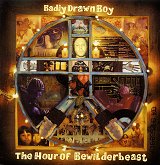
1. Badly Drawn Boy – The Hour Of The Bewilderbeast
2. Lambchop – Nixon
3. Jill Scott – Who Is Jill Scott
4. Primal Scream – Extrmntr
5. Radiohead – Kid A
6. P.J. Harvey – Stories From The City, Stories From The Sea
7. Godspeed You Black Emperor – Lift Your Skinny Fistd Like Antennas To Heaven
8. Phoenis - Untitled
9. Erykah Badu – Mama’s Gun
10. David Holms – Bow Down To The Exit Sign
11. Hobotalk – Beauty In Madness
12. Eminem – The Marshall Mathers LP
13. Outkast – Stankonia
14. Madonna – Music
15. Wu-Tang Clan – The W
16. Jimi Tenor – Out Of Nowhere
17. Coldplay – Parachutes
18. Kelis – Kaleidoscope
19. Wycleff Jean – The Ecleftic
20. At The Drive In - Relationship In Command
The Times Best Albums Of The Year 2009
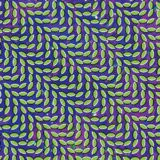
1. Animal Collective - Merriweather Post Pavilion (Domino)
2. Nneka - No Longer at Ease (Yo Mama’s)
3. St Vincent - Actor (4AD)
4. Manic Street Preachers - Journal for Plague Lovers (Sony)
5. Wild Beasts - Two Dancers (Domino)
6. Madness - The Liberty of Norton Folgate (Lucky Seven)
7. Jamie T - Kings and Queens (Virgin)
8. Monsters of Folk - Monsters of Folk (Rough Trade)
9. Noah and the Whale - The First Days of Spring (Mercury)
10. Dave Rawlings Machine - A Friend of a Friend (Acony)
11. Bat for Lashes - Two Suns (Parlophone)
12. Sibrydion Campfire Classics (Dell’Orso)
13. Mos Def - The Ecstatic (Downtown)
14. Brendan Benson - My Old, Familiar Friend (Echo)
15. Yeah Yeah Yeahs - It’s Blitz! (Polydor)
16. Bob Dylan Together Through Life (Columbia)
17. Wilco - Wilco (The Album) (Nonesuch)
18. Sweet Billy Pilgrim - Twice Born Men (Samadhi Sound)
19. Noisettes - Wild Young Hearts (Mercury)
20. Prefab Sprout - Let’s Change the World with Music(Kitchenware)
New Artists
1. The XX - xx (XL)
2. Passion Pit - Manners (Columbia)
3. Fever Ray - Fever Ray (Rabid)
4. The Duke and the King - Nothing Gold Can Stay (Loose)
5. La Roux - La Roux (Polydor)
6. Blue Roses - Blue Roses (XL)
7. Golden Silvers - True Romance (XL)
8. Speech Debelle - Speech Therapy (Big Dada)
9. Bombay Bicycle Club - I Had the Blues but I Shook Them Loose (Island)
10. Local Natives - Gorilla Manor (Infectious)
